

Executive summary
In a randomized study at the West Des Moines, IA Police Department, officers who trained in Ace Virtual Shooting improved their live-fire hit factor on the most demanding of the tested pistol drills, three times as much as officers who did not. The officers in the test group that trained with Ace got measurably faster without losing a significant degree of accuracy. The officers who spent the most time training in Ace, improved the most at the live-fire follow-up assessment.
The training fit around patrol schedules. Ace Test Group officer participants logged an average of 12 hours in the headset, in sessions typically 8 to 21 minutes long, with no live-fire ammunition cost and no logistical or transportation time burden that is commonly experienced with live-fire range training sessions.
- 3X improvement by Ace Test Group on the hardest drill of the study: On USPSA Classifier 03-18 “High Standards,” Ace Test Group officers raised their hit factor — points scored divided by seconds taken, the competitive-shooting standard that rewards speed and accuracy together — by 35%, compared with 11% for the control group. 19 of 20 Ace officers improved, and the difference is statistically significant (p = 0.009).
- Higher hit factor on every drill: The Ace Test Group improved its hit factor on all three drills: +35% on High Standards, +8% on the Accelerator and +19% on the Bill Drill. The control group gained 11%, lost 7% and gained 16%. The gap was widest on the two multi-target drills, where either target transitions, or one-handed shooting were required.
- Faster, without getting less accurate: Both groups got faster, but the Ace Test Group cut more time on every drill and held its accuracy. On High Standards, Ace officers’ points scored rose from 59% to 67% of possible while the control group’s fell from 64% to 61%. On the Accelerator, the control group’s A-zone hit rate dropped from 60% to 46% while Ace officers held steady at about 55%.
- More training, bigger gains: The more hours officers spent training in Ace, the more their live-fire scores rose. Officers who logged 11 or more hours improved their aggregate hit factor across all three drills by 25%, compared with a 10% improvement for Ace Test Group officers who trained 6–10 hours and only a 7% improvement for the control group.
“We intend to deploy Ace Virtual Shooting across our entire department, incorporating structured instructor and peer coaching. This approach will allow us to improve fundamentals through frequent, focused repetitions while significantly reducing the time, cost, and logistical demands associated with traditional range training.”
Chief Craig Bellamy, West Des Moines, IA Police Department
The challenge
Firearms proficiency is a perishable skill, and most agencies lack the financial and time resources to drive significant performance improvement across their organization at large. Range days and ammo budgets compete with patrol staffing, overtime funds and facility availability. Qualification standards confirm a minimum; they rarely build the speed, transitions, fine-twitch muscle memory and confidence that real encounters demand.
The West Des Moines Police Department wanted a direct answer to one question: does supplemental training in Ace Virtual Shooting deliver better live-fire performance?
The study
Forty sworn officers were randomly assigned to two groups of 20 and tested on the same live-fire course before and after an Ace Test Group intervention period. Because of shift schedules, days off and leave, the time between each officer’s baseline and follow-up averaged about 13 weeks (early to mid-July through early to mid-October 2026). All 40 participants completed both the baseline live-fire assessment and the follow-up live-fire assessment.
| Ace Test Group | Control Group | |
|---|---|---|
| Officers | 20 | 20 |
| Training period (late July to early October) | Normal department practice + Ace | Normal department practice only |
| Ace content | Draw-and-fire fundamental stages, target transition stages | None |
| Live-fire tests | Baseline July 1–15, follow-up October 1–9 | Baseline July 1–15, follow-up October 5–19 |
Each officer shot three drills three times at each assessment, for a total of 720 scored live-fire strings across the Control Group and the Ace Test Group:
- Bill Drill: six rounds on one target at 7 yards.
- USPSA Classifier 03-18 “High Standards” (modified): 24 rounds on three targets, freestyle, then strong-hand only and weak-hand only.
- Accelerator (“Gear Change” in Ace): two rounds each on targets at 7, 15 and 25 yards.
The primary metric was hit factor, the competitive-shooting standard that combines speed and accuracy: points scored divided by seconds taken. Standard USPSA targets were used, scored 5 / 3 / 1 by zone, with a 10-point penalty for each miss. The same range, targets and scoring methodology were used for both assessments.
Result 1: Three times the hit-factor gain on the hardest drill
On High Standards, the Ace group’s average hit factor rose from 3.03 to 4.09, a 35% gain. The control group rose from 2.92 to 3.24, an 11% gain.
- 19 of 20 Ace officers improved, compared with 14 of 20 in the control group.
- After adjusting for each officer’s starting skill, Ace training added 0.76 hit factor on this drill (95% confidence interval 0.20 to 1.31; p = 0.009).
- The Ace Test Group’s advantage over the control group is large and statistically significant by research standards (Cohen’s d = 0.86), confirmed by three separate methods: a baseline-adjusted comparison (p = 0.009), a straight comparison of improvement scores (p = 0.01), and a test that is not swayed by outliers (p = 0.02).
19 of 20 Ace officers raised their High Standards score
Each line is one officer’s average hit factor, baseline to follow-up, sorted by follow-up score
In the Ace group, 19 of 20 officers improved and the group’s average hit factor rose from 3.03 to 4.09. In the control group, 14 of 20 improved and the average rose from 2.92 to 3.24.
- Baseline
- Follow-up, Ace
- Follow-up, control
- Follow-up, score declined
Ace group: 19 of 20 improved
Control group: 14 of 20 improved
Results at a glance
- average hit factor improvement on the “High Standards” drill by Ace Test Group
- +35%
- Officers in the Ace Test Group improved in their post VR intervention period live-fire shooting test
- 19 of 20
- Largest individual hit factor improvement on the “High Standards” drill by an Ace Test Group participant
- +278%
Of the live-fire drills tested in this study, “High Standards” is the drill that most resembles what officers struggle with under pressure: rapid transitions across multiple targets, plus shooting with the strong hand only and the weak hand only.
Result 2: Faster, without getting less accurate
The Ace Test Group raised its hit factor on all three drills: 35% on High Standards, 8% on Accelerator and 19% on the Bill Drill. The control group gained 11%, lost 7% and gained 16%. The gap was widest on the two multi-target drills, where transitions and one-handed shooting decide the score.
Hit factor matters because it measures speed and accuracy together. It divides points scored by seconds taken, so it only rises when an officer gets faster without giving up hits, or more accurate without slowing down. That is the standard a real encounter sets: an officer has to stop a threat quickly, and every round fired is the officer’s and the agency’s responsibility. A higher hit factor means more rounds on target in less time. That matters on both sides of an encounter: speed improves an officer’s chances of going home safely, and accuracy protects civilian bystanders in the vicinity of the engagement.
Hit factor by drill: Ace pulled ahead on “High Standards” and “Accelerator”
Group averages, baseline to follow-up. Hit factor = points scored ÷ seconds, so it rewards speed and accuracy together.
Change in hit factor, Ace versus control: High Standards up 35% versus up 11%; Accelerator up 8% versus down 7%; Bill Drill up 19% versus up 16%.
- Ace Test Group
- Control Group
Change in hit factor
Hit factor, baseline to follow-up
High Standards
Change in hit factor
- Ace+35%
- Control+11%
Hit factor, baseline to follow-up
Accelerator
Change in hit factor
- Ace+8%
- Control−7%
Hit factor, baseline to follow-up
Bill Drill
Change in hit factor
- Ace+19%
- Control+16%
Hit factor, baseline to follow-up
Everyone got faster. Ace officers did it without losing accuracy.
Group averages, baseline to follow-up. Left: how much faster each group shot. Right: what happened to their hits.
On High Standards the Ace group shot 17% faster and its points scored rose from 59% to 67% of possible, while the control group shot 16% faster and fell from 64% to 61%. On Accelerator the Ace group shot 19% faster and held its A-zone hit rate at 55% to 54%, while the control group shot 10% faster and dropped from 60% to 46%.
- Ace Test Group
- Control Group
Speed
Accuracy
High Standards
Speed
% faster than baseline, average time per string
- Ace17% faster24.9 s → 20.7 s
- Control16% faster27.6 s → 23.3 s
Accuracy
Points scored, % of possible
Accelerator
Speed
% faster than baseline, average time per string
- Ace19% faster5.1 s → 4.1 s
- Control10% faster5.5 s → 4.9 s
Accuracy
A-zone hit rate
Bill Drill: Ace officers sped up more, and accuracy held roughly steady
Group averages, baseline to follow-up. Left: how much faster each group shot. Right: what happened to their hits.
On the Bill Drill the Ace group shot 24% faster, from 4.0 to 3.0 seconds, with an A-zone hit rate of 59% then 56%. The control group shot 18% faster, from 4.5 to 3.7 seconds, with an A-zone hit rate of 61% then 63%.
- Ace Test Group
- Control Group
Speed
Accuracy
Bill Drill
Speed
% faster than baseline, average time per string
- Ace24% faster4.0 s → 3.0 s
- Control18% faster4.5 s → 3.7 s
Accuracy
A-zone hit rate
The control group’s pattern is the familiar one: push the pace and the hits drift out of the A-zone. On Accelerator, where targets sit at 7, 15 and 25 yards, the control group lost ground overall. The Ace group sped up and kept its hits, and on High Standards it shot faster and more accurately. Both accuracy differences are statistically significant (p = 0.04 and p = 0.02).
“Ace Virtual Shooting provides an exceptional platform for identifying and correcting deficiencies in shooting structure, grip, visual focus, and trigger control based on target difficulty.”
Chief Craig Bellamy, West Des Moines, IA Police Department
Result 3: More time in Ace, bigger gains
The Ace platform logs every individual officer’s training sessions. As a result, the study could test the following question: “Did the officers who trained more in Ace improve more at the live-fire follow-up assessment?” They did.
Officers with 11+ hours in Ace gained 25% overall vs. 7% for control
Change in average live-fire hit factor, baseline to follow-up, by headset hours logged in Ace
Across all three drills combined, officers with 11 to 24 hours in Ace gained 25%, officers with 6 to 10 hours gained 10% and the control group gained 7%. On High Standards the three groups gained 43%, 25% and 11%.
- Control group
- Ace, 6–10 hours (9 officers)
- Ace, 11–24 hours (11 officers)
Bill Drill
- Control+16%
- Ace, 6–10 hrs+7%
- Ace, 11–24 hrs+27%
High Standards
- Control+11%
- Ace, 6–10 hrs+25%
- Ace, 11–24 hrs+43%
Accelerator
- Control−7%
- Ace, 6–10 hrs+4%
- Ace, 11–24 hrs+11%
All three drills
- Control+7%
- Ace, 6–10 hrs+10%
- Ace, 11–24 hrs+25%
- Hours tracked results: the more time an officer spent in Ace, the more their live-fire score rose, both on High Standards (r = 0.59, p = 0.006) and across all three drills combined (r = 0.57, p = 0.008).
- Not just the best shooters: the link holds after accounting for each officer’s starting skill, and it holds with the two heaviest users removed.
- The high-use group stands out: the 11 officers who logged 11 to 24 hours outperformed the control group on High Standards (p = 0.002), on Accelerator (p = 0.03) and on the combined score (p = 0.05).
Aggregate: the more hours officers spent in Ace, the more their live-fire score rose
Each dot is one Ace officer: headset hours vs. aggregate change in average hit factor, all three drills combined
Twenty Ace officers, from 6 to 24 headset hours. The trend rises with hours (r = 0.57). The control group’s average change was +0.29.
- One Ace officer
- Trend: r = 0.57
- Control group average: +0.29
- aggregate gain across all three live-fire drills for officers that logged 11+ hours of Ace Training
- +25%
What this means for agencies
Ace Virtual Shooting is easy to use, and enables officers to train at a higher frequency than most agencies can achieve with live-fire training. The virtual training completed in Ace translated to live-fire improvement in this test. The gains were largest on drills that included multiple targets, and also on drills that included one-handed shooting requirements.
- A Small Time Investment Delivers Improvement: The protocol called for roughly 45 minutes per week in sessions of about 15 minutes — no range, ammunition cost, transportation time, or range officer required. Over the ~13-week period, Ace Test Group officers logged an average of 12 headset hours, in sessions typically 8 to 21 minutes long.
- Cost-Effective Training: The 20 Ace Test Group officers fired roughly 300,000 virtual rounds over the test period; an equivalent live-fire ammunition cost would be ~$90,000 (at $0.30 per round of duty-equivalent 9mm, before range time, staffing, and transportation), volume that few agency ammunition budgets can afford.
- Measurable Carryover: Unstructured virtual training with Ace Virtual Shooting was shown to transfer into live-fire improvement.
- Accountability and Performance Metrics: Every Ace session is logged per officer, with hours, runs, rounds and scores. This enables training leadership to confirm that their officers are training at a desired frequency. The individual performance data collected can help both individual officers and training staff track progression and identify focus areas for continued skill development.
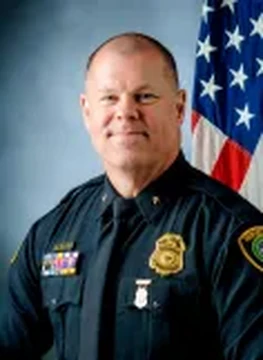
The Chief’s Assessment
Chief Craig Bellamy of the West Des Moines, IA Police Department shared the following qualitative assessment of the study and of Ace Virtual Shooting’s role in the department’s training going forward.
Eliminating the Traditional Barriers to Better Training
For years, our profession has watched one poor shooting performance after another, often involving well-intentioned officers who simply lacked the skills necessary to perform effectively under pressure.
Each time, we hear the same response: We must do better. We must train more. We must improve performance.
Yet the barriers remain unchanged: insufficient range time, ammunition costs, staffing constraints, travel, targets, and range maintenance.
Ace Virtual Shooting gives us an opportunity to eliminate many of those barriers.
Imagine officers completing focused, highly effective 10–15-minute training sessions at the station, in a gym, or virtually anywhere suitable. Each session provides immediate feedback, identifies deficiencies, and allows officers to make corrections before those errors become ingrained habits. Small improvements, repeated consistently over time, produce extraordinary gains with training that is fun, engaging, and effective.
We no longer have to rely exclusively on occasional range days to develop critical, lifesaving skills. We can make meaningful training a routine part of every officer’s professional development.
While the improvements demonstrated in the study are encouraging, they represent only the tip of the iceberg of what is possible with Ace Virtual Shooting. The study provided officers with a brief introduction and an opportunity for effective repetitions, but it lacked one of the most important components of skill development: sustained coaching.
Building Better Shooters With Ace Virtual Shooting
Ace Virtual Shooting provides an exceptional platform for identifying and correcting deficiencies in shooting structure, grip, visual focus, and trigger control based on target difficulty.
One of the most valuable—and initially counterintuitive—benefits of Ace Virtual Shooting is that the absence of recoil can actually help shooters learn to manage live-fire recoil more effectively.
Effective shooting requires proper structure, target focus, and trigger control appropriate to the difficulty of the shot. The goal is to allow the firearm to recoil and return naturally, rather than attempting to force it back onto target. Shooters who try to drive the gun back frequently introduce inconsistencies that negatively affect follow-up shots.
Because the Ace pistol does not recoil, deviations from the intended point of aim become easier to recognize as shooter-induced errors. These may include changes in strong-hand or support-hand grip pressure, unnecessary attempts to drive the gun, or movement introduced during the trigger press.
Ace Virtual Shooting allows shooters to isolate, recognize, and correct these inconsistencies with a level of awareness that is very difficult to achieve during live fire.
We intend to deploy Ace Virtual Shooting across our entire department, incorporating structured instructor and peer coaching. This approach will allow us to improve fundamentals through frequent, focused repetitions while significantly reducing the time, cost, and logistical demands associated with traditional range training.
Advanced Skills: Where Ace Virtual Shooting Becomes Even More Valuable
Once fundamentals are established, we will progress into shooting on the move, target transitions, and engaging moving targets. These are areas where I believe Ace Virtual Shooting offers an even greater advantage over traditional live-fire training.
- No range setup or travel time. Officers can complete highly productive 10–15-minute training sessions almost anywhere. This allows patrol officers to complete a highly effective training session and then get back to the street as the next officer completes their session. Ace Virtual Shooting allows effective sustainment training without negatively impacting operations.
- Immediate, detailed feedback. Missed follow-up shots, visual errors, and inefficient transitions can be identified and corrected. For example, shooters who shift their focus from the target to the dot frequently drag subsequent shots off the intended aiming point while shooting on the move. With Ace Virtual Shooting they can identify these patterns and, with that knowledge, make corrections.
- Micro-drill capability. Complex skills can be broken into individual components, including target entries and exits, transitions, and shooting while moving in every direction.
- Improved coaching opportunities. Instructors can observe shooter mechanics from angles that would be unsafe during live fire, including directly in front of the shooter.
- High-volume moving-target training. Most officer-involved shootings involve the suspect moving, the officer moving, or both. We know this, but the vast majority of officers have extremely limited or no training with moving targets. Training against moving targets tends to be extremely costly and difficult to set up and run, so it does not happen. Shooters initially struggle with moving targets, often aiming at the entire target rather than selecting a precise point. Through repeated exposure and feedback, they learn to apply the same visual process used on stationary targets: identify a specific aiming point and apply the appropriate sight confirmation and trigger control. Ace Virtual Shooting excels at this.
More quality repetitions, immediate feedback, and consistent coaching produce faster skill development. Ace Virtual Shooting makes that process accessible on a scale that traditional live-fire training cannot economically or logistically match.
What makes these results particularly significant is that the improvements were achieved primarily through repetition, self-analysis, and performance feedback within the Ace platform, without structured instructor or peer coaching. The next phase will incorporate both, creating the potential for substantially greater improvements in skill development and performance than those demonstrated by the initial test group.
The Final Component: Accountability
Perhaps the most important capability of Ace Virtual Shooting’s enterprise offering is accountability.
Everyone agrees that officers need more training—until it is time to train.
As Chief, I can establish higher performance standards, but standards alone do not improve performance. We must provide the tools, coaching, opportunities, and accountability necessary for officers to achieve them.
Ace for Enterprise provides a mechanism to track participation, measure progress, identify officers needing additional support, and ensure that training produces measurable improvements.
We cannot predict which officer will be called upon to use their skills to save their own life or someone else’s. We cannot afford weak links in our profession.
Our responsibility is not simply to train our best officers to become exceptional. It is to raise the capability of every officer in the organization so they can perform effectively if called to do so.
By combining clear standards, quality coaching, frequent deliberate practice, and measurable accountability, we have an opportunity to elevate the performance of an entire unit, an entire department, and ultimately our profession.
The technology is available. The barriers are lower than ever. What remains is our commitment to use it.
Utilizing Ace Virtual Shooting is how we move beyond talking about better training and begin delivering it.
— Chief Craig Bellamy, West Des Moines, IA Police Department
Methodology and data notes
- Analysis: Results compare each group’s change from baseline to follow-up. Group differences are tested with an analysis of covariance that adjusts for each officer’s baseline score, the standard method for randomized pre/post studies. Paired t-tests, independent t-tests and non-parametric tests were run as checks.
- Scoring: Each live-fire string’s hit factor was recalculated from its recorded zone hits and time. Strings that scored below zero because of miss penalties were set to zero, following USPSA convention, and each officer’s three strings were averaged.
- Live-Fire Administration: The live-fire portion of the test was administered and tracked by police officer leadership at The City of West Des Moines, IA Police Department.
- Study Design: The control group received no supplemental training beyond normal department practice. The study therefore measures the effect of adding Ace Virtual Shooting to an agency’s existing program, not how Ace compares with an equal amount of extra live-fire range time. This reflects the choice most agencies actually face, as few can easily add 12 hours of practice per officer (and do so on a frequent and recurring basis) given range time allotment, setup time, and ammunition cost.
- Study Roles and Funding: This study was a collaboration between the West Des Moines Police Department, an existing Ace customer, and Ace. Ace did not fund the study. WDMPD arranged the live-fire assessments, oversaw all scoring, and ensured Test Group officers completed their Ace training. Ace supplied the virtual training data and performed statistical analysis.
- Bill Drill: Both groups improved on this single-target drill (Ace +19%, control +16%). The Ace Test Group cut its time by about a second per string (24% faster, vs. 18% for the control group), while keeping similar accuracy metrics. That is consistent with Ace’s skill development emphasis on transitions, target acquisition and sight alignment, as opposed to felt-recoil control which is an important skill for the rapid six-shot requirement of the “Bill Drill.”
- Shot Timer Metrics: The study measured total time per string, not individual split or transition times.
- Ace Test Group Training Dose: Headset hours were tracked from the Ace platform’s per-officer training record. Officers chose how much to train, so dose was not randomized. Dose analyses adjust for each officer’s baseline score, and the high- and low-use groups are split at the median of 11 hours.