
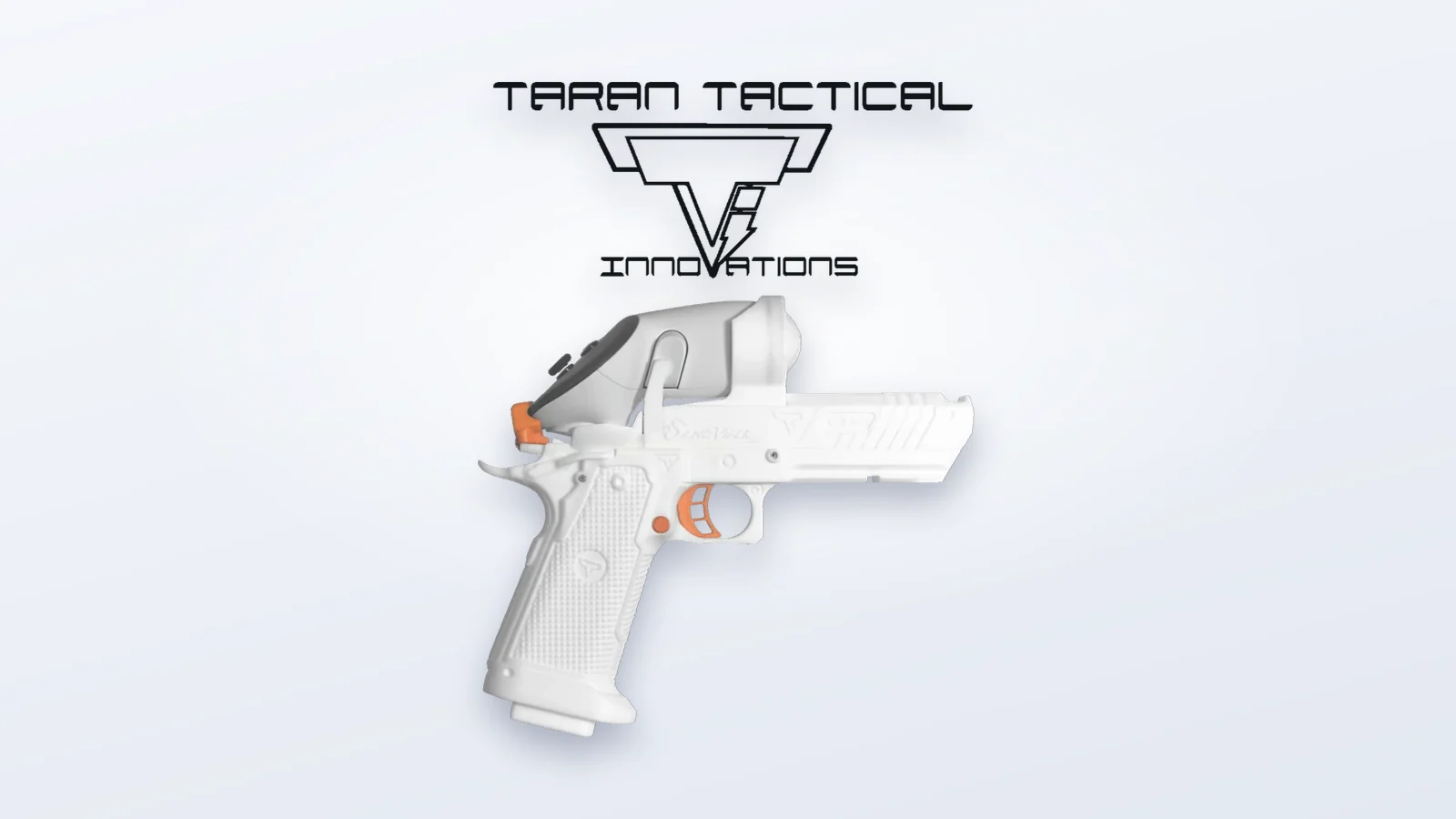
Sand Viper Skill Transfer Planner
You probably won't carry an $8,199.99 double-stack 1911. You can still train the grip, trigger control, and target transitions that make it fast. Answer five questions and get a weekly plan built around your carry gun — with par times and rep counts, not vague advice.
Your plan appears here: your weekly time split into sessions, a weekly rep target, draw, split and transition par times adjusted for the gun you carry, the drills for the traits you picked, and the race-gun habits not to copy.
What actually transfers from a TTI Sand Viper
- Flat trigger & short reset: the press itself transfers. A tuned 2011 trigger hides sloppy fingers; your carry trigger will not. Train straight-back presses until the sights never move.
- Grip index & recoil control: a consistent, crush-grip index is gun-agnostic. The Sand Viper just shows you faster when the grip is wrong.
- Vision & target transitions: 100% transferable. Eyes to the next target before the gun arrives — same skill on a race gun, a Glock 19, or a revolver.
- Draw to first hit: mechanics transfer; times do not. A race holster and a magwell are worth real tenths that a concealed carry rig will never give you back.
- Splits and cadence: the decision to call the shot and break the next one transfers. The raw split time does not — comp, weight, and load are doing work for you.
- Reloads: the index and the hand path transfer. The funnel does not. Practice reloads on the gun you carry.
What does not transfer
- Race-gun weight and grip circumference — your hand index will be different.
- Open-front competition holsters and belt setups vs. concealment.
- Match stage pacing vs. defensive decision-making under a threat cue.
The TTI Sand Viper is one of the most recognizable pistols in modern shooting culture. It's Taran Tactical Innovations' flagship double-stack 1911, built to win 2-gun and 3-gun matches and made famous by the same shop that armed the John Wick films. Flat-shooting. Fast. Unmistakable in coyote bronze.
Most defenders will never carry one. That doesn't mean it can't make you better. The skills a race gun rewards—consistent grip, clean trigger presses at speed, disciplined eyes—are the same skills that decide a defensive encounter. And with a VR handset that replicates the Sand Viper's weight, grip texture, and trigger break, you can build those reps at home, every night, without burning ammo.
Here's what the Sand Viper is, what actually transfers to defensive shooting, and how to train with it.
What the TTI Sand Viper Actually Is
Taran Tactical Innovations was founded by Taran Butler, a champion competitive shooter who also trains actors for major film productions. The Sand Viper is the shop's flagship double-stack 1911—a 2011-pattern 9mm designed as an all-out competition pistol rather than a carry gun.
Retail listings for the Sand Viper package describe a consistent feature set: a 5-inch DLC-coated match-grade barrel, a large single-port compensator, a Trijicon SRO red dot on a low optic cut, a TTI magwell, extended controls, aggressive grip texture, and a light match trigger. Major retailers list the pistol with the SRO already mounted, which tells you how the gun is meant to be run: red dot forward, both eyes open, driving between targets.
Why the design choices matter
- Weight plus a compensator. A heavy steel frame and a single-port comp keep the muzzle flat, so the dot returns to the same spot shot after shot.
- Low optic cut. Mounting the SRO as close to the bore as possible shortens the distance your eye travels to find the dot on the draw.
- Enlarged magwell. A funnel that forgives imperfect magazine alignment under time pressure.
- Aggressive texture. The grip locks into your hands so recoil doesn't shift your index between shots.
Every one of those features exists to solve a problem defenders also face: keeping the sights on target while shooting fast under stress.
Race Gun, Defender Mindset: What Transfers and What Doesn't
Be honest about the gap between a 2-gun pistol and a concealed-carry gun. Then exploit the overlap.
What carries straight over
- Grip pressure and consistency. The hand position that tames a comped 2011 is the same crush-grip mechanic that controls a compact 9mm.
- Trigger control at speed. Pressing straight back without disturbing the sights is universal. A light trigger exposes flaws faster, not slower.
- Vision and target transitions. Eyes lead, gun follows. Snapping your focus to the next target before the muzzle arrives is a defensive skill first and a competition skill second.
- Shot calling. Knowing where the shot went before you look at the target is what lets you decide whether to fire again.
What does not transfer
- Trigger weight. A match trigger breaking near 3.5 pounds behaves nothing like a factory striker-fired trigger in the 5.5- to 6.5-pound range.
- Concealment and the draw. Clearing a cover garment from an appendix holster is its own skill set.
- Recoil and muzzle blast. A heavy comped gun flatters your technique. Your carry pistol will not.
- Weight and carryability. A pistol built to hang on a competition belt is not a daily companion.
The practical takeaway: use a Sand Viper—real or virtual—as a skill amplifier, then verify those skills with the gun you actually carry. Train the mechanic on the platform that gives you the clearest feedback, then prove it on the platform that matters.
Training the Sand Viper in VR With an Ace Handset
You don't need an $8,000 match pistol and a competition membership to train like this. Ace builds a TTI Sand Viper handset that pairs with a Meta Quest headset and replicates the pistol's defining traits.
- Weight: over 2 pounds with a Quest controller installed, matching the balance and size of a full-size pistol.
- Trigger: roughly a 3.5-pound pull with a tactile and audible break and reset—you feel the wall, you feel the reset.
- Grip: Ace's most aggressive pyramid texture, mirroring TTI's double-stack 1911 profile and enlarged magwell.
- Reloads: an extended, textured magazine button; drop the mag in-game, tap the bottom of the handset, and you're back in the fight.
The point isn't novelty. It's repetition with feedback. Every shot is tracked, scored, and timed, so you can see accuracy and split times move over weeks instead of guessing. Independent reviewers have found the transfer credible: a Gun Digest reviewer reported cutting seconds off transition drills and confirming the improvement in live fire, while Shooting Illustrated's review noted measurably faster real-world split times after several weeks on the system.
The economics defenders care about
Live fire is irreplaceable, but it's expensive and slow. With 9mm practice ammo commonly running $0.25 to $0.40 per round, a 200-round range session costs $50 to $80 before range fees and drive time. VR reps cost nothing after the hardware. That changes what a realistic training week looks like: four short sessions at home plus one focused range trip, instead of one rushed range trip and nothing else.
A Defender's Weekly Plan With the TTI Sand Viper Handset
Four sessions. Fifteen to twenty minutes each. Quality over volume.
- Session 1 — Presentation and first shot. From a low-ready or compressed-ready start, drive the gun out and break one accurate shot. Chase a consistent dot pickup, not a personal record.
- Session 2 — Trigger control at speed. Run six-shot strings on a single target. The Sand Viper handset's crisp reset teaches you to prep the trigger as the dot settles.
- Session 3 — Transitions and multiple threats. Two to four targets at varied distances. Move your eyes first. Track how your transition times compress week to week.
- Session 4 — Scenarios and reloads under pressure. Use decision-based drills where not every target is a threat. Add a reload mid-string so the mechanic becomes automatic.
Metrics worth tracking
Log four numbers: draw-to-first-shot time, average split, transition time, and hit percentage. If your times drop while hit percentage holds above 90 percent, you're getting faster. If hits fall off, you're just rushing. Ace's shot tracking and leaderboards do this math for you, which is why structured VR work beats unstructured dry fire for most people.
Then validate. Once a month, take your carry gun to the range and run the same drills live. Skills that survive the transfer are real. Skills that don't need more work on the actual platform.
Is the Sand Viper Handset the Right Pick for You?
Choose based on your goals, not aesthetics.
- Pick the Sand Viper if you want maximum weight and the most aggressive texture, you shoot or aspire to shoot 2011-pattern guns, or you compete in multigun and want that specific grip index burned in.
- Consider a striker-fired-style handset if your carry gun is a compact polymer pistol and you want the closest possible match to your daily platform. Compare the options across the full Ace handset lineup before you commit.
Plenty of shooters run both: a duty-pattern handset for carry-gun fidelity and the Sand Viper for high-speed grip and recoil management work. If you want to feel the difference before buying, Ace lists demo locations where you can try a handset in person.
For a training path built around defensive priorities—decision-making, accuracy under stress, and repeatable presentations—start with Ace's resources for defenders and build your week from there.
Frequently Asked Questions
What is the TTI Sand Viper?
It's Taran Tactical Innovations' flagship double-stack 1911 in 9mm, built as a 2-gun and 3-gun competition pistol. Retail listings describe a 5-inch DLC-coated match barrel, a large single-port compensator, a Trijicon SRO on a low optic cut, a TTI magwell, extended controls, and a light match trigger, typically finished in coyote bronze.
Is the Sand Viper a good self-defense pistol?
No. It's a full-size, heavy, compensated competition gun with a light match trigger—excellent on a match belt, impractical for daily concealed carry. Its value to defenders is as a training tool: the grip, trigger, and vision skills it rewards transfer directly to your carry gun.
How close is the Ace TTI Sand Viper handset to the real pistol?
It replicates the dimensions, the enlarged magwell, the aggressive grip texture, and a trigger that breaks around 3.5 pounds with a tactile and audible reset. With a Meta Quest controller installed it weighs over 2 pounds, so your hands and forearms work the way they do with a full-size pistol.
Can VR training actually improve live-fire performance?
Structured repetition with measurable feedback is how motor skills are built, and reviewers at Gun Digest and Shooting Illustrated both reported faster real-world times after training on the Ace system. VR supplements live fire; it doesn't replace it. Recoil, muzzle blast, and holster work still require range time.
How often should a defender train with a VR handset?
Four sessions of 15 to 20 minutes per week outperforms one long session. Short, focused reps keep quality high and prevent the sloppy repetitions that build bad habits. Add one live-fire range session each month with your carry gun to confirm the skills transferred.