
Steel Challenge Match Time Estimator
Eight stages. Five plates. One timer. Enter the numbers you already know — first shot, transitions, stop plate habits — and get a projected match time, an approximate class band, per-stage projections, and the three reps that buy back the most seconds.
Approximate class bands used here
Bands are based on your standard five-plate string time — first shot plus four transitions plus stop plate plus makeups. Official SCSA classification uses peak stage times, so treat these as a ballpark, not a card.
- 1.90 s or faster — Grand Master pace. Eyes are already on the next plate before the shot breaks.
- 1.91 – 2.25 s — Master pace. Draw and transitions are both near their ceiling.
- 2.26 – 2.70 s — A class pace. One soft component is usually holding the match time.
- 2.71 – 3.30 s — B class pace. Transitions are clean; the first shot or stop plate is leaking time.
- 3.31 – 4.10 s — C class pace. Big gains available from dry reps, not from more ammo.
- 4.11 – 5.20 s — D class pace. Build the draw and the visual transition before chasing speed.
- Slower than 5.20 s — Entry pace. Every rep counts; start with hits, then add the timer.
The drill library this tool pulls from
- Draw to first shot — par-timer reps from your match rig, each one 0.15 s under your current time.
- Five-plate transition sweep — eyes to the plate first, gun follows the eyes, same order every rep.
- Stop plate discipline — call the last plate out loud and break the shot as the sight settles, no re-verify.
- Shot calling at 75 percent — confirm every hit before the gun moves, until makeups disappear.
- Box-to-box entry — for Outer Limits: gun up and ready before the foot lands.
Stage models used: Five To Go, Showdown, Smoke and Hope, Outer Limits, Accelerator, Pendulum, Speed Option, Roundabout. Each stage scores the best four of five strings.
The SCSA Steel Challenge is the most approachable speed-shooting sport in the country, and it may be the best public scorecard a defensive shooter can find. Eight stages. Five plates each. One timer. No scoring rings, no hit factor math, no complicated courses of fire to memorize on the clock. Just how fast you can draw, see, and hit.
That simplicity is exactly why it matters to defenders. If you carry a handgun for protection, your skill set lives or dies on the first second: draw, grip, sight picture, press. Steel Challenge measures that second in hundredths. This guide breaks down how the sport works, which skills carry over to defensive shooting, and how to build the reps that actually drop your times.
What the SCSA Steel Challenge Actually Is
Steel Challenge began in 1981 as a Southern California speed-shooting match and is now governed by the Steel Challenge Shooting Association, affiliated with USPSA since 2007. Unlike USPSA or IPSC field courses, the stages never change. The same eight courses of fire are shot at every sanctioned club, so your times are directly comparable month over month and club to club.
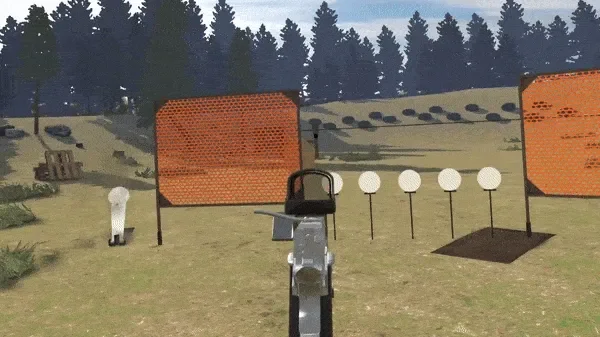
Each stage uses five painted steel plates: 10- to 12-inch circles and 18x24-inch rectangles, set anywhere from roughly 7 to 35 yards. One plate is marked as the stop plate and must be engaged last. Hit anything, anywhere on a plate and it counts — there are no points for center hits.
The eight stages
The courses of fire are Five to Go, Showdown, Smoke & Hope, Outer Limits, Accelerator, Pendulum, Speed Option, and Roundabout. Each isolates something different: Smoke & Hope is a raw speed test on close, large plates. Outer Limits forces movement between shooting boxes. Accelerator and Pendulum stretch distance and demand a real sight picture. Showdown and Speed Option reward an efficient plan executed under pressure.
How scoring works
Steel Challenge is scored on time alone. You shoot five runs per stage, and your slowest run is dropped — except Outer Limits, where four runs are shot and the best three count. Miss a plate and fail to clean it up before hitting the stop plate, and you take a three-second penalty per standing target. Runs are also capped at 30 seconds. Add your counted times across all eight stages and that total is your match score.
Why Defenders Should Care About a Speed-Shooting Sport
Steel Challenge is not a self-defense simulation. Nobody is shooting back, there is no cover, and no decisions are required. But it is an honest, repeatable measurement of the mechanical skills defensive shooting depends on — and measurement is what most private-range practice lacks.
Here is what carries over directly:
- Draw to first shot. Handgun divisions typically start from the holster with hands relaxed at your sides. That is the same movement you would make under stress, timed and recorded.
- Visual processing. Five targets at different distances and angles teaches your eyes to lead the gun instead of chasing it — the core of fast, accurate target transitions.
- Grip and recoil control. Plate-to-plate splits expose a weak support hand instantly. If the gun doesn't return to the same place, your times say so.
- Trigger control at speed. Most defenders shoot acceptable groups slowly. Steel Challenge reveals what happens to your trigger press when the timer is running.
- Performance under observation. Shooting in front of a squad and a range officer creates mild, useful stress. It is not a gunfight, but it is not an empty bay either.
The sport is also unusually easy to enter. With 13 rifle and pistol divisions, Steel Challenge is one of the most gear-friendly action shooting sports — rimfire pistol and rimfire rifle divisions let a new shooter compete with inexpensive ammunition, while Carry Optics, Production, Single Stack, Limited, and Open divisions cover nearly any defensive handgun already in your safe.
The Four Skills That Decide Your Time
1. The draw, not the shooting
On a close stage like Smoke & Hope, the draw can account for a large share of a sub-three-second run. Defenders get a double benefit: the fastest competition draw is built on the same elements as a sound defensive draw — a consistent grip established in the holster, a straight path to extension, and eyes on target before the gun arrives.
2. Target transitions
Time between plates is where matches are won. The fix is almost never moving the gun faster; it is moving your eyes first, snapping vision to the next plate and letting the muzzle track to where you are already looking. This is a trainable habit, and it is the single skill that transfers most cleanly to multiple-threat defensive scenarios.
3. Calling your shots
Steel gives audible feedback, but sound arrives late. Fast shooters know the hit before they hear it because they saw the sights lift off the plate. Learning to call shots breaks the habit of waiting to verify, which wastes time on long plates.
4. Stop plate discipline
The most common new-shooter mistake is rushing the stop plate and missing, which adds far more time than a careful final shot ever costs. Treat the last plate as a deliberate shot. Build that pattern early and it stays with you.
Building SCSA Steel Challenge Reps Away From the Range
Here is the practical problem: five runs on eight stages is 40 runs, and with warm-up you can burn several hundred rounds in a single match day. Between ammunition, range fees, and travel, most shooters cannot practice Steel Challenge stages at volume with live fire.
That is why serious competitors have always leaned on dry practice. A 2023 study of novice shooters found that six weeks of structured dry-fire practice measurably improved rifle shooting scores compared with a control group — a small study, but consistent with what every competitive discipline already knows: repetition without ammunition builds the mechanics.
VR adds what dry fire cannot: a target, a timer, and a score on every press. At Ace XR you run stage-style drills on a Meta Quest with a weighted handset, then review hit location and transition times. You can run a transition drill 50 times in the time it takes to tape and reset a live bay once. The handset provides visual recoil, not felt recoil. Live fire is still where you confirm the sights come back.
A practical weekly structure that works for defenders:
- Two short VR or dry-fire sessions, 15 minutes each. One session on draw to first shot, one on transitions. Short and focused beats long and sloppy.
- One technical session. Work a single weakness — long plates or reacquiring the dot — with no timer for the first half.
- One live-fire confirmation session per month. Verify that what you built in training holds up with real recoil and real ammunition.
- One match. Treat the match as the test, not the practice. Shoot your plan, not someone else's pace.
Shooters who split time between defensive training and competition often run both tracks in the same system — see how the defensive training path and the competition path differ in drill selection, because the goals are not identical even when the mechanics overlap.
Your First SCSA Match: What to Expect
Most clubs run local Steel Challenge matches monthly, and the entry bar is low. Shooting Sports USA publishes a useful primer on starting in Steel Challenge, but the essentials are short:
- Bring: a reliable handgun, a sturdy belt-mounted holster that covers the trigger guard, three or more magazines, 150 to 200 rounds, eye and ear protection, and a hat with a brim.
- Arrive early. Tell the match director it is your first match. Nearly every club will pair you with an experienced shooter.
- Know the safety rules. The firearm comes out of the holster only on the line under range officer direction, muzzle downrange, finger off the trigger until on target.
- Declare a division you already own. Do not buy equipment before your first match. Shoot what you carry.
- Expect to help. Squads paint plates and run timers together.
Shoot your first match for hits, not time. Your baseline times matter far more than your placement — they are the number you measure every future session against.
Frequently Asked Questions
What does SCSA stand for?
SCSA is the Steel Challenge Shooting Association, the governing body for Steel Challenge in the United States. It has been affiliated with USPSA since 2007, and sanctioned clubs across the country run the same eight standardized stages under a shared rulebook.
Is the SCSA Steel Challenge good practice for concealed carry?
It is excellent practice for the mechanics — draw, grip, sight acquisition, trigger control, and transitions — and it gives you timed, comparable data. It does not train movement, cover, decision-making, or legal judgment, so treat it as one part of a defensive training plan rather than the whole plan.
What gun do I need for my first Steel Challenge match?
Whatever reliable handgun you already own. Centerfire semi-autos must be 9mm or larger and revolvers .38 Special or larger, but rimfire pistol divisions are popular, cheap to feed, and a low-recoil way to learn the stages. Shoot your carry gun if your goal is defensive skill.
How many rounds should I bring?
Plan on 150 to 200 rounds for a standard eight-stage match. Each stage requires at least 25 hits across five runs, and misses, make-up shots, and warm-up add up quickly.
Can VR training really lower my Steel Challenge times?
VR won't replace live fire, but it builds the repeatable mechanics that dominate your times — draw speed, visual transitions, and trigger control — at a volume live fire can't match. Shooters who train with shot tracking and timed drills between matches arrive with sharper muscle memory and spend range time confirming skills instead of building them.