
Ace XR Training Planner
Build Your 15-Minute VR Shooting Plan
Answer five questions. Get a named five-drill week built around the defensive skills you actually need — draw speed, trigger control, target transitions, threat discrimination — plus the live-fire round volume those reps replace.
Your plan appears here: a named five-drill week with reps and a cue for each day, a range day to validate live, and the live-fire rounds and ammo cost those reps stand in for.
The drill library this planner assigns from
- Concealed Draw Ladder — grip, clear, present. Builds the draw stroke muscle memory that eats most of a defender's reaction time.
- Trigger Press Isolation — slow presses with zero sight movement at the break. The fix for low-left hits.
- Bill Drill — six presses on one target. Same grip, ride the reset, sights stay put.
- Transition Box — three to five targets, eyes leading the muzzle. Stops over-swing and wasted time between threats.
- Shoot / No-Shoot Discrimination — randomized targets, hands-first identification. The rep you cannot safely run on a public lane.
- Reload Under the Clock — magwell index with eyes downrange, run to a par time.
- Move-to-Cover Engagement — move when you're not shooting, shoot when you're not moving.
- Low-Light Identification — light on to identify, light off to move. Range hours rarely allow it; VR always does.
Round-equivalent math assumes $0.30 per round of 9mm practice ammo and 50 training weeks per year. Your plan is a training schedule, not a substitute for qualified in-person instruction or live-fire validation.
Ace VR shooting puts a tracked handset in your palm, a scenario in front of you, and a scorecard behind every rep — without burning a single round. For defenders, that changes the math on training. Range time is limited. Ammo costs money. And the skills that matter most in a home-defense emergency — drawing under stress, identifying a threat in a dark hallway, moving to cover while keeping your muzzle disciplined — are the hardest skills to rehearse at a public lane with a cold range rule and a static paper target.
This guide breaks down how VR firearms training works, what the research says about skill transfer, and the exact drills a defensive shooter should run each week. If you carry daily or keep a pistol staged at home, this is how to turn 15 minutes in your living room into measurable range performance.
What Ace VR Shooting Actually Is — and What It Isn't
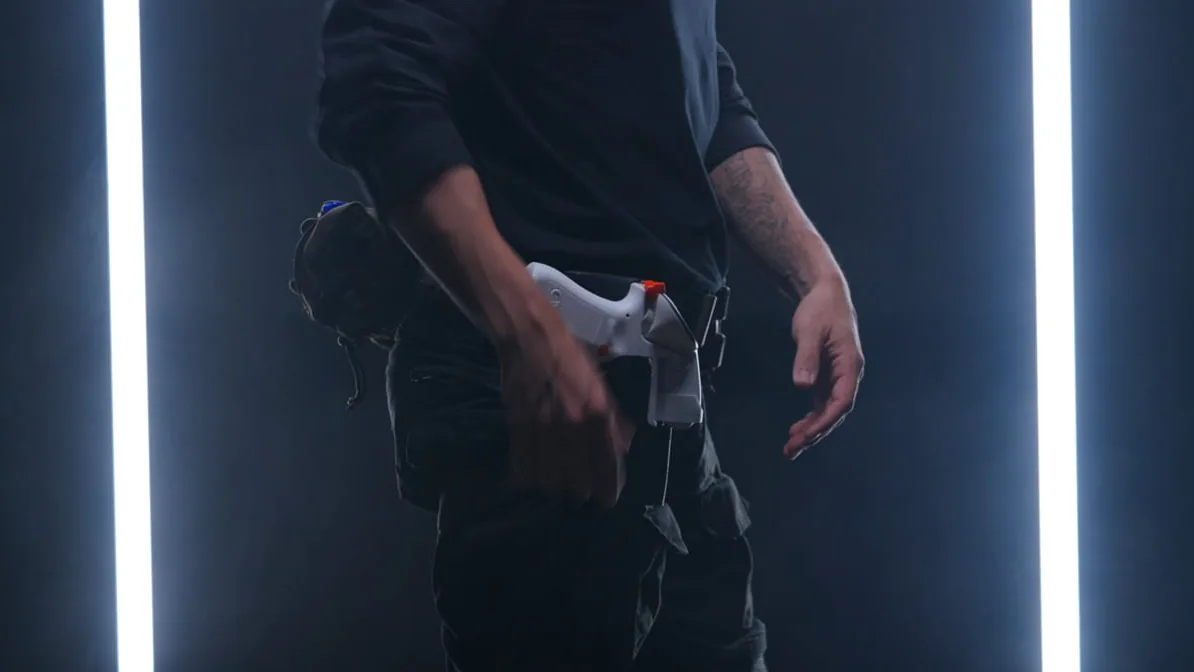
VR firearms training is not a video game with a plastic pistol. The core of the system is a weighted, tracked handset paired with a Meta Quest headset. The handset mirrors the dimensions and trigger feel of a real pistol platform, so your grip, draw stroke, presentation, and trigger press are built on the same physical geometry you use with your carry gun.
Inside the headset, you get three things a dry-fire session at home cannot give you:
- Shot feedback. Every round is scored and located. You see your impact, your split times, and your draw-to-first-shot time.
- Scenarios that move. Targets appear, advance, transition, and force decisions. You train discrimination, not just mechanics.
- Repeatable measurement. Drills run the same way every session, so progress is data instead of a feeling.
What it isn't: a replacement for live fire. Recoil management, true muzzle rise, and the sensory load of a running gun are things only live ammunition teaches. Think of VR as the volume layer and the range as the verification layer. You build reps at home, then confirm them with real rounds.
Why VR Reps Transfer to Real Range Performance
Shooting is a motor skill under stress. Motor skills improve with correct, high-volume, spaced repetition. Stress performance improves with exposure. VR attacks both.
Stress is part of the skill
Researchers studying police firearms performance in a virtual reality experiment published in Frontiers in Psychology documented how sympathetic nervous system activation — elevated heart rate, altered breathing, narrowed attention — directly degrades shooting mechanics. Training that never raises your arousal level never trains that part of the problem. Immersive scenarios do, because your body responds to the threat cue even when you know it's simulated.
The cost of that unpracticed stress response is measurable. In a study of officers facing a simulated lethal-force domestic assault, a visible startle response preceded the draw and slowed the response — even when the threat was close and obvious. Defenders don't get a warning buzzer at 2 a.m. The only way to shorten that gap is to rehearse the surprise.
Volume beats intensity
A typical range trip might produce 15 to 25 draws. A focused 15-minute VR session can produce the same number of draws in the first five minutes, then another 40 after that. More importantly, the reps are spaced across the week instead of crammed into one Saturday, which is how motor patterns consolidate into reliable muscle memory.
You can train what ranges prohibit
Most commercial ranges ban drawing from concealment, movement, shooting from retention, and low-light work. Those restrictions remove exactly the skills a defender needs. Low light matters more than most shooters assume: work from the ALERRT Center at Texas State University highlights that reduced light degrades threat detection and compounds an already-existing reaction-time disadvantage. VR lets you dim the room, add a weapon light, and run the problem safely.
Five Ace VR Shooting Drills Defenders Should Run Every Week
Structure beats volume with no plan. Rotate these five, and log your numbers.
1. Draw to first shot
From concealment or from your staged position. Ten reps. Track draw time and first-shot accuracy separately. Accuracy is the gate — if hits drop, slow the presentation until they return. Then build speed.
2. Target transitions
Two to four targets at varied distances. Drive the gun with your eyes, not your hands. Transitions expose grip inconsistency faster than any other drill, and the timer tells you immediately whether you're searching for the sights or arriving on them.
3. Threat discrimination
Mixed shoot / no-shoot scenarios. The win condition isn't speed — it's zero wrong decisions. This is the single highest-value drill available in VR and the one that is nearly impossible to replicate on a paper target.
4. Reload and malfunction under pressure
Run your reload at the back end of a 20-second scenario, when your heart rate is up and your hands are less precise. Clean reloads at a calm bench mean little; clean reloads after a sprint of decisions mean everything.
5. Movement and cover
Move, stop, shoot. Then shoot while moving laterally. Practice clearing a doorway and using angles. Defenders fight in houses with corners, not on flat lanes — and your own home floor plan is the scenario that matters most.
End each session with one scored run you record. That becomes your baseline. The Ace XR defender training path organizes these drills into a progression, so you aren't guessing at what to work on next.
Building a Training Week That Actually Sticks
The best program is the one you repeat. A realistic defender schedule looks like this:
- Three Ace VR shooting sessions per week, 15 minutes each. One mechanics day, one decision-making day, one scenario day.
- One dry-fire session, five minutes. Trigger control with your actual carry gun, unloaded, in a cleared room.
- One live-fire range trip per month. Verify. Shoot a scored qualification or a standards drill and compare it to your VR numbers.
Two rules make this work. First, train the gear you carry: same holster position, same cover garment, same light. Second, write down three numbers every session — draw time, first-shot accuracy, and decision errors. Trends matter more than any single run, and shot tracking with leaderboards turns consistency into something you can see.
Choosing a VR Shooting Setup
Not all VR shooting is equal. Judge a system on four criteria.
Handset realism
Weight, balance, grip angle, and trigger break determine whether your reps transfer. A lightweight controller teaches a grip you'll have to unlearn. Purpose-built tracked firearm handsets keep the physical skill honest.
Tracking fidelity
If the system can't resolve a two-inch sight offset, it can't coach your trigger press. Look for shot placement data, not just hit or miss.
Drill depth and scoring
You need standards you can retest: par times, scored stages, decision scenarios, and a history you can review. Training without measurement is just activity.
The headset
Ace runs on Meta Quest only. Not every headset.
Get a Quest 3 if you are buying one. Best picture, best tracking, best overall for Ace.
A Quest 3S will get you by. Same generation, lower resolution.
Do not buy a Quest 2 for Ace. If you already own one, it will run. Use it to start. Do not spend money on one now.
Try before you commit
Nothing beats putting hands on the handset. Ace XR lists in-person demo locations where you can run a scored drill yourself and compare it to your live-fire performance. Agencies and units evaluating simulation budgets should review the LE/MIL training options, which address qualification-adjacent training and documentation requirements.
Done right, Ace VR shooting becomes the part of your training you never skip — the 15 minutes between dinner and bedtime that quietly makes your next range trip your best one.
Frequently Asked Questions
Does VR shooting practice really improve live-fire accuracy?
It improves the components of accuracy you can rehearse without recoil: grip consistency, sight alignment, trigger press, draw efficiency, and target transitions. Research on virtual reality firearms scenarios shows they also elicit genuine stress responses, which is why decision-making and draw speed often improve first. Recoil control still requires live rounds, so treat VR as volume and the range as verification.
How much VR training per week do defenders need?
Three focused 15-minute sessions per week outperform one long weekend session. Spaced repetition consolidates motor patterns better than massed practice. Add five minutes of dry fire with your carry gun and one live-fire trip per month to confirm your numbers.
Can I train draw-from-concealment and low-light scenarios?
Yes, and that is a major advantage over most public ranges, which prohibit drawing from concealment, movement, and low-light work. In VR you can dim the environment, wear your normal cover garment, and run the same holster position you carry every day.
What equipment do I need to start?
A compatible Meta Quest headset and a tracked firearm handset. The handset is what separates meaningful training from a game, since weight, grip angle, and trigger feel determine whether your reps carry over to your real pistol.
Is VR training useful for law enforcement and military units?
It is widely used to add repetition between live-fire qualifications, rehearse judgment scenarios, and document training volume without range scheduling or ammunition costs. Decision drills and scenario work are especially valuable, since they build the shoot / no-shoot discrimination that paper targets cannot teach.